Yearly Archives: 2023


Hazardous Materials

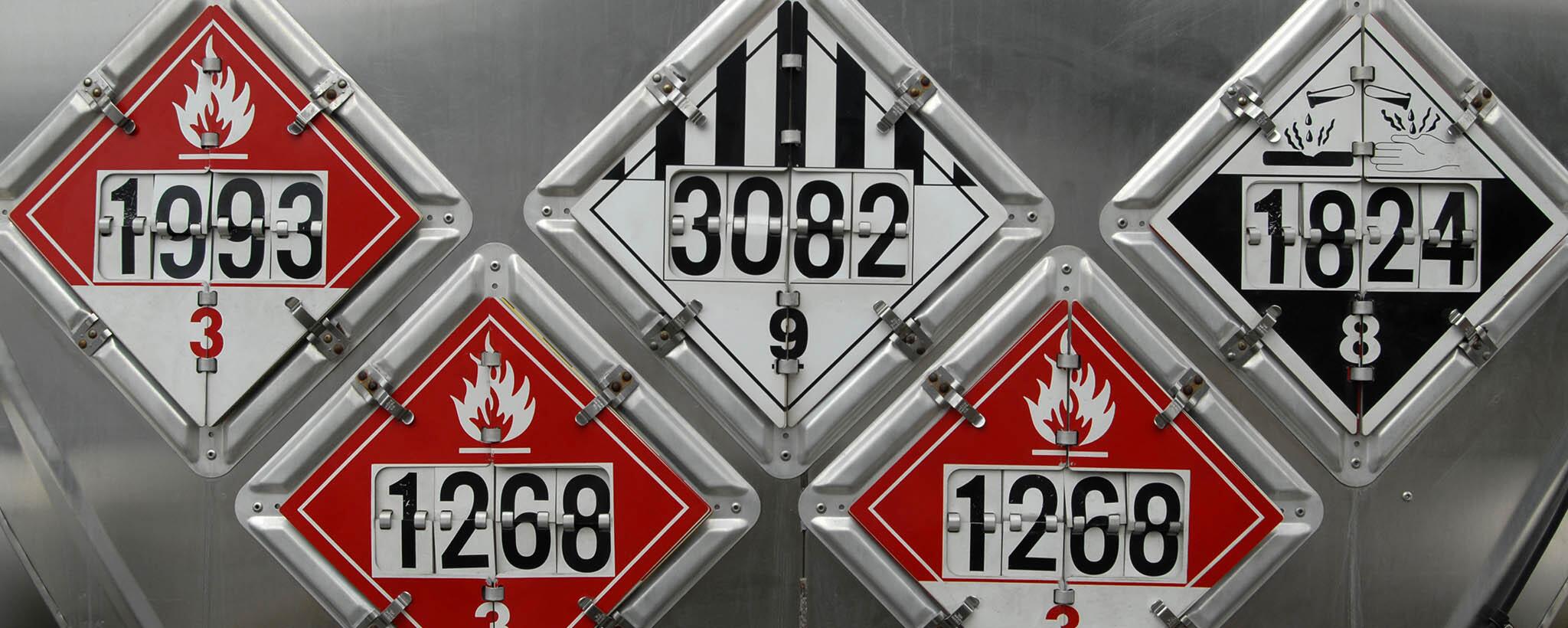
Chemicals are found everywhere. They purify drinking water, increase crop production, and simplify household chores. But chemicals also can be hazardous to humans or the environment if used or released improperly. Hazards can occur during production, storage, transportation, use, or disposal. You and your community are at risk if a chemical is used unsafely or released in harmful amounts into the environment where you live, work, or play. Hazardous materials in various forms can cause death, serious injury, long-lasting health effects, and damage to buildings, homes, and other property. Many products containing hazardous chemicals are used and stored in homes routinely. These products are also shipped daily on the nation’s highways, railroads, waterways, and pipelines. Chemical manufacturers are one source of hazardous materials, but there are many others, including service stations, hospitals, and hazardous materials waste sites. Varying quantities of hazardous materials are manufactured, used, or stored at an estimated 4.5 million facilities in the United States–from major industrial plants to local dry cleaning establishments or gardening supply stores. Hazardous materials come in the form of explosives, flammable and combustible substances, poisons, and radioactive materials. These substances are most often released as a result of transportation accidents or because of chemical accidents in plants.

Specific information on what to do Before, During and After a Hazardous Materials Incident can be found at:
http://www.ready.gov/hazardous-materials-incidents


Flood

Flood waters

Floods are one of the most common hazards in the United States. Flood effects can be local, impacting a neighborhood or community, or very large, affecting entire river basins and multiple states.

However, all floods are not alike. Some floods develop slowly, sometimes over a period of days. Flash Floods can develop quickly. City streets can become rivers in seconds.
Flash floods often have a dangerous wall of roaring water that carries rocks, mud, and other debris and can sweep away most things in its path. Overland flooding occurs outside
a defined river or stream, such as when a levee is breached, but still can be destructive. Flooding can also occur when a dam breaks, producing effects similar to flash floods.

Be aware of flood hazards no matter where you live, but especially if you live in a low-lying area, near water or downstream from a dam. Even very small streams, gullies, creeks,
culverts, dry streambeds, or low-lying ground that appears harmless in dry weather can flood.

Specific information on what to do Before, During and After a Flood can be found at: http://www.ready.gov/floods.


Fire

Heat kills by pushing the human body beyond its limits. In extreme heat and high humidity, evaporation is slowed and the body must work extra hard to maintain a normal temperature.
Most heat disorders occur because the victim has been overexposed to heat or has over-exercised for his or her age and physical condition. Older adults, young children, and
those who are sick or overweight are more likely to succumb to extreme heat.
Conditions that can induce heat-related illnesses include stagnant atmospheric conditions and poor air quality. Consequently, people living in urban areas may be at greater
risk from the effects of a prolonged heat wave than those living in rural areas. Also, asphalt and concrete store heat longer and gradually release heat at night, which can produce higher nighttime temperatures.
Specific information on what to do Before and During Extreme Heat Conditions can be found at: http://www.ready.gov/heat.


Extreme Heat

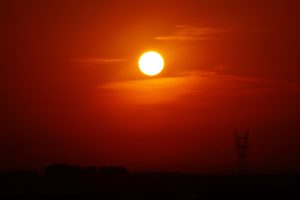
Sun setting on horizon

Heat kills by pushing the human body beyond its limits. In extreme heat and high humidity, evaporation is slowed and the body must work extra hard to maintain a normal temperature.
Most heat disorders occur because the victim has been overexposed to heat or has over-exercised for his or her age and physical condition. Older adults, young children, and
those who are sick or overweight are more likely to succumb to extreme heat.
Conditions that can induce heat-related illnesses include stagnant atmospheric conditions and poor air quality. Consequently, people living in urban areas may be at greater
risk from the effects of a prolonged heat wave than those living in rural areas. Also, asphalt and concrete store heat longer and gradually release heat at night, which can produce higher nighttime temperatures.
Specific information on what to do Before and During Extreme Heat Conditions can be found at: http://www.ready.gov/heat.


Explosions

Photo by Andy Watkins on Unsplash

Terrorists have frequently used explosive devices as one of their most common weapons. Terrorists do not have to look far to find out how to make explosive devices; the information is readily available in books and other information sources. The materials needed for an explosive device can be found in many places including variety, hardware, and auto supply stores. Explosive devices are highly portable using vehicles and humans as a means of transport. They are easily detonated from remote locations or by suicide bombers.

Conventional bombs have been used to damage and destroy financial, political, social, and religious institutions. Attacks have occurred in public places and on city
streets with thousands of people around the world injured and killed.

Specific information on what to do Before, During and After an explosion can be found at: http://www.ready.gov/explosions.


Earthquake

One of the most frightening and destructive phenomena of nature is a severe earthquake and its terrible after-effects. Earthquakes strike suddenly, violently, and without warning at any time of the day or night. If an earthquake occurs in a populated area, it may cause many deaths and injuries and extensive property damage.

Specific information on what to do Before, During and After an Earthquake can be found at: http://www.ready.gov/earthquakes.


Dam Failure

Dam failure can occur with little warning. Intense storms may produce a flood in a few hours or even minutes for upstream locations. Flash floods occur within six hours of the beginning of heavy rainfall, and dam failure may occur within hours of the first signs of breaching. Other failures and breeches can take much longer to occur, from days to weeks, as a result of debris jams or the accumulation of melting snow. The result of a dam failure is flooding.

Specific information on what to do Before, During and After a Dam Failure can be found at: http://www.ready.gov/floods

To learn more about Dam Safety guidelines, click here.


Chemical Threat

Industrial image showing pollution

Chemical agents are poisonous vapors, aerosols, liquids, and solids that have toxic effects on people, animals, or plants. They can be released by bombs or sprayed from aircraft, boats, and vehicles. They can be used as a liquid to create a hazard to people and the environment. Some chemical agents may be odorless and tasteless. They can have an immediate effect (a few seconds to a few minutes) or a delayed effect (2 to 48 hours). While potentially lethal, chemical agents are difficult to deliver in lethal concentrations. Outdoors, the agents often dissipate rapidly. Chemical agents also are difficult to produce.

A chemical attack could come without warning. Signs of a chemical release include people having difficulty breathing; experiencing eye irritation; losing coordination; becoming nauseated; or having a burning sensation in the nose, throat, and lungs. Also, the presence of many dead insects or birds may indicate a chemical agent release.

Specific information on what to do Before, During and After a Chemical Attack can be found at: www.ready.gov/chemical-threats


Biological Threat


Biological agents are organisms or toxins that can kill or incapacitate people, livestock, and crops. The three basic groups of biological agents that would likely be used as weapons are bacteria, viruses, and toxins. Most biological agents are difficult to grow and maintain. Many break down quickly when exposed to sunlight and other environmental factors, while others, such as anthrax spores, are very long lived. Biological agents can be dispersed by spraying them into the air, by infecting animals that carry the disease to humans, and by contaminating food and water.

Delivery methods include:

  • Aerosols – biological agents are dispersed into the air, forming a fine mist that may drift for miles. Inhaling the agent may cause disease in people or animals.
  • Animals – some diseases are spread by insects and animals, such as fleas, mice, flies, mosquitoes, and livestock.
  • Food and water contamination – some pathogenic organisms and toxins may persist in food and water supplies. Most microbes can be killed, and toxins deactivated, by cooking food and boiling water. Most microbes are killed by boiling water for one minute, but some require longer. Follow official instructions.
  • Person-to-person – spread of a few infectious agents is also possible. Humans have been the source of infection for smallpox, plague, and the Lassa viruses.

Specific information on what to do Before, During and After a Biological Attack can be found at: http://www.ready.gov/biological-threats.