
Drought

Nearly every part of the U.S. experiences periods of reduced rainfall. Planning in advance for a drought can protect us in dry years.
Before a Drought
The best way to prepare for a drought is to conserve water. Make conserving water a part of your daily life.
Indoor Water Conservation Tips Before a Drought
GENERAL
- Never pour water down the drain when there may be another use for it. For example, use it to water your indoor plants or garden.
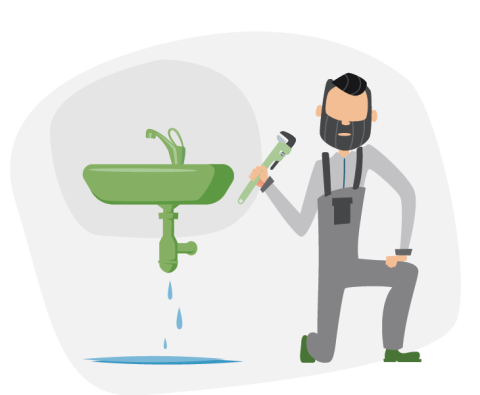
- Fix dripping faucets by replacing washers. One drop per second wastes 2,700 gallons of water a year.
- Check all plumbing for leaks and have any leaks repaired by a plumber.
- Retrofit all household faucets by installing aerators with flow restrictors.
- Install an instant hot water heater on your sink.
- Insulate your water pipes to reduce heat loss and prevent them from breaking.
- Install a water-softening system only when the minerals in the water would damage your pipes. Turn the softener off while on vacation.
- Choose appliances that are more energy and water efficient.
BATHROOM
- Consider purchasing a low-volume toilet that uses less than half the water of older models.
- Install a toilet displacement device to cut down on the amount of water needed to flush. Place a one-gallon plastic jug of water into the tank to displace toilet flow. Make sure it does not interfere with the operating parts.
- Replace your showerhead with an ultra-low-flow version.
KITCHEN
- Instead of using the garbage disposal, throw food in the garbage or start a compost pile to dispose it.
Outdoor Water Conservation Tips Before a Drought
GENERAL
- If you have a well pump, check it periodically. If the automatic pump turns on and off while water is not being used, you have a leak.
- Plant native and/or drought-tolerant grasses, ground covers, shrubs and trees. Once established, your plants won’t need as much watering. Group plants together based on similar water needs.
- Don’t install ornamental water features (such as fountains) unless they use re-circulated water.
- Consider rainwater harvesting where practical.
- Contact your local water provider for information and assistance.
LAWN CARE
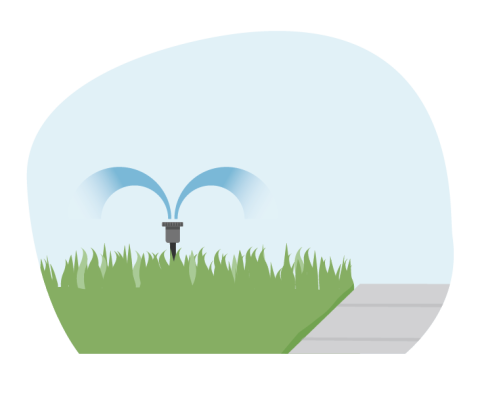
- Position sprinklers so water lands on the lawn and shrubs and not on paved areas.
- Repair sprinklers that spray a fine mist.
- Check sprinkler systems and timing devices regularly to be sure they operate properly.
- Raise the lawn mower blade to at least three inches or to its highest level. A higher cut encourages grass roots to grow deeper and holds soil moisture.
- Plant drought-resistant lawn seed. Reduce or eliminate lawn areas that are not used frequently.
- Don’t over-fertilize your lawn. Applying fertilizer increases the need for water. Apply fertilizers that contain slow-release, water-insoluble forms of nitrogen.
- Choose a water-efficient irrigation system such as drip irrigation for your trees, shrubs and flowers.
- Water manually in fall and winter only if needed.
- Use mulch around trees and plants to retain moisture in the soil. Mulch also helps control weeds that compete with plants for water.
- Invest in a weather-based irrigation controller—or a smart controller. These devices will automatically adjust the watering time and frequency based on soil moisture, rain, wind, and evaporation and transpiration rates. Check with your local water agency to see if there is a rebate available for the purchase of a smart controller.
POOL
- Install a water-saving pool filter. A single back flushing with a traditional filter uses 180 to 250 gallons of water.
- Cover pools and spas to reduce water evaporation.
During a Drought
Always observe state and local restrictions on water use during a drought. Contact your state or local government for current information and suggestions.
Indoor Water Conservation Tips During a Drought
BATHROOM
- Avoid flushing the toilet unnecessarily. Dispose of tissues, insects and other similar waste in the trash rather than the toilet.
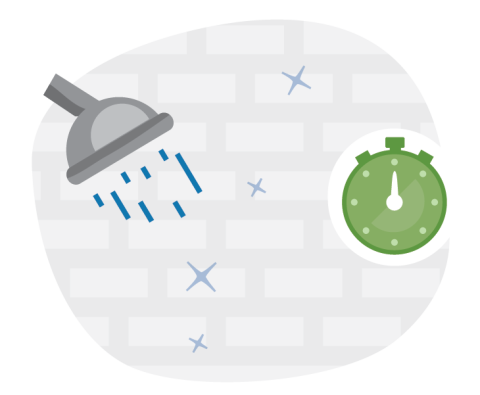
- Take short showers instead of baths. Turn on the water only to get wet and lather and then again to rinse off.
- Avoid letting the water run while brushing your teeth, washing your face or shaving.
LAUNDRY
- Operate clothes washers only when they are fully loaded or set the water level for the size of your load.
KITCHEN
- Operate automatic dishwashers only when they are fully loaded. Use the “light wash” feature to use less water.
- Hand wash dishes by filling two containers—one with soapy water and the other with rinse water containing a small amount of chlorine bleach.
- Clean vegetables in a pan filled with water rather than running water from the tap.
- Avoid wasting water waiting for it to get hot. Capture it for other uses such as plant watering or heat it on the stove or in a microwave.
- Don’t rinse dishes before placing them in the dishwasher, just remove large particles of food.
- Avoid using running water to thaw meat or other frozen foods. Defrost food overnight in the refrigerator or use the defrost setting on your microwave.
Outdoor Water Conservation Tips During a Drought
LAWN CARE
- A heavy rain eliminates the need for watering for up to two weeks. Most of the year, lawns only need one inch of water per week.
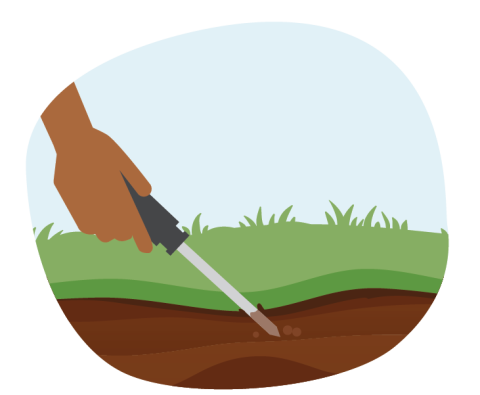
- Check the soil moisture levels with a soil probe, spade or large screwdriver. You don’t need to water if the soil is still moist. If your grass springs back when you step on it, it doesn’t need water yet.
- If your lawn does require watering, do so early in the morning or later in the evening, when temperatures are cooler.
- Water in several short sessions rather than one long one, in order for your lawn to better absorb moisture and avoid runoff.
- Use a broom or blower instead of a hose to clean leaves and other debris from your driveway or sidewalk.
- Avoid leaving sprinklers or hoses unattended. A garden hose can pour out 600 gallons or more in only a few hours.
- In extreme drought, allow lawns to die in favor of preserving trees and large shrubs.
CAR WASHING
- Use a commercial car wash that recycles water.
- If you wash your own car, use a shut-off nozzle that can be adjusted down to a fine spray on your hose.